The Next Competitive Advantage for Cities is Local Ownership
Capital attraction is no longer enough. Cities must structure investment so more value remains rooted locally. Local ownership is becoming a competitive advantage for cities that want growth to translate into lasting wealth.


For decades, cities have competed for capital by offering tax incentives, assembling land, upgrading infrastructure, and creating innovation districts. That competition is not going away. Cities still need external capital to finance housing, infrastructure, commercial corridors, and small business growth.
But the next era of urban economic development will not be defined only by which cities can attract capital. It will be defined by which cities can structure capital well enough to retain more of the value it creates.
That is where local ownership becomes a competitive advantage.
The Limits of Capital Attraction
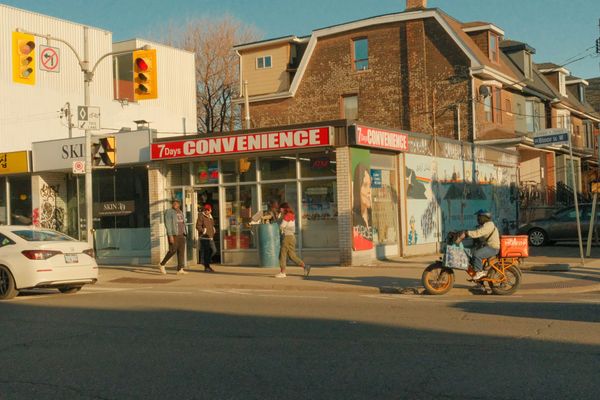
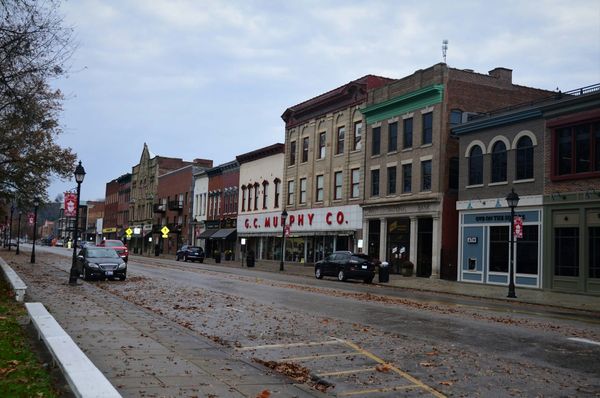
A city can attract investment and still struggle to build broad-based prosperity. New projects can rise while residents remain renters in the city’s economic future. Commercial corridors can be redeveloped while legacy businesses are priced out. Workforce programs can train people for jobs without building pathways into asset creation.
This is not a binary question of whether development is good or bad. The issue is whether development is structured to circulate value locally or extract it outward.
Traditional economic development focuses heavily on inflow, tracking capital announced, jobs projected, and square footage built. These are important metrics, but they fail to answer a deeper question. Once investment enters a place, who owns the assets, who captures the upside, and where does the value go next?
Most cities already have the standard pieces of the economic development puzzle, including redevelopment commissions, housing authorities, workforce boards, and community development corporations. What many lack is an ownership strategy.
An ownership strategy looks beyond access and inclusion to the structure of economic participation itself. It maps who owns the housing, commercial space, operating businesses, and land. Without this layer, cities can improve the physical environment without changing the underlying economic architecture.
The building changes, but the balance sheet does not. The neighborhood becomes more attractive, but the people who carried it through disinvestment may gain little real control over its future.
Practical Tensions in the Flow of Deals
Local ownership is not anti-investment. Outside capital is structurally necessary for large-scale revitalization. However, moving this framework from theory to practice requires confronting three real-world hurdles.
First is the velocity of capital. Institutional capital moves fast and demands predictable timelines. Adding local co-investment requirements or shared ownership models can introduce legal complexity and transaction delays. If the process feels too burdensome, capital simply moves to a city with fewer conditions. Local ownership cannot be a symbolic add-on at the end of a deal. It must be built into the market architecture early enough to be viable and simple enough to execute.
Second is the civic capacity gap. Community land trusts, cooperative ownership models, and neighborhood investment funds require legal, financial, and administrative capacity. Many mid-sized and post-industrial cities lack the civic infrastructure to manage these tools at scale. Without that capacity, ownership strategies remain well-intentioned concepts sitting outside the actual flow of deals.
Finally, there is downside risk exposure. Ownership creates upside, but it also carries risk. If residents or local institutions are invited into ownership without safeguards, they can absorb losses they are not positioned to carry. A neighborhood-owned commercial project that struggles during a downturn can weaken the very households it was meant to strengthen.
Ownership-centered development means designing structures that deliberately align risk, return, and capacity. This requires integrating tools like patient capital, first-loss protection, philanthropic credit enhancements, technical assistance, or local investment vehicles managed by experienced intermediaries.
The goal is not to slow capital down for the sake of process, but to make capital work better for the places receiving it.
What Capital Circulation Looks Like
Across U.S. cities, localized models are already proving that alternative ownership architecture can successfully alter how value moves.
In Anchorage, Alaska, the Anchorage Community Land Trust chose to target commercial real estate rather than just residential housing. Rather than waiting for speculative developers to determine the future of the underinvested Mountain View corridor, the trust acquired and repositioned key commercial properties for community-serving uses, including non-profit spaces and a neighborhood financial institution. By controlling the land layer, they ensure legacy entrepreneurs aren't priced out by the revitalization they helped spark.
Similarly, the Oakland Community Land Trust in California expanded its mandate into mixed-use and commercial properties to combat extreme real estate speculation. By acquiring assets supporting live-work artist spaces, grassroots organizations, and worker-owned enterprises, the trust permanently secures the neighborhood institutions that define local identity.
In East Portland, Oregon, the Community Investment Trust offers a model for neighborhood co-investment. The trust purchased a 29,000 square foot commercial retail property and structured the asset so residents in surrounding zip codes could buy shares for $10 to $100 per month. The trust now features over 300 local family investors, primarily first-time investors and low-income residents. With consistent annual dividends, the actual users of the neighborhood directly capture the financial upside of its rising property values.
Further east, Evergreen Cooperatives in Cleveland, Ohio, demonstrate how to link anchor-institution demand to employee-owned local businesses. Realizing that major neighborhood anchors like the Cleveland Clinic spent billions on procurement annually that immediately leaked out of the local economy, city partners seeded a network of employee-owned cooperatives, including a commercial laundry facility, to meet those procurement needs. Workers earn equity over time, building durable wealth through the city's permanent institutional spend.
The common thread across these models is design. They work not because they sound equitable, but because they are attached to real assets and recurring revenue.
Their success relies on a three-part blueprint. They de-speculate strategic assets by moving them out of purely extractive market dynamics. They create accessible entry points so participation is not limited to high-net-worth investors. Finally, they align ownership with existing capital flows, including tenant rent, institutional procurement, and community-serving real estate.
Shifting the Municipal Scorecard
Shifting to an ownership-centered strategy fundamentally changes what cities must measure. Traditional economic development tracks capital volume, projected jobs, and housing units brought online. An ownership-centered city strategy doesn't throw those metrics out, but it insists on completing them.
Instead of tracking only what flows in, we must track what stays rooted. This means measuring the percentage of commercial square footage locally owned. It means tracking how many small businesses secure permanent, affordable space, and how many everyday residents hold equity in shared vehicles. It means evaluating how much public land is converted into long-term community benefits, and exactly how many procurement dollars flow directly to local firms.
A city that attracts investment but fails to build ownership may grow without transforming. A city that builds ownership alongside investment has a stronger chance of turning development into durable local wealth.
The next phase of urban economic development will require a more sophisticated question. We must ask not just “how do we get capital into this place?” but “how do we design systems so that capital strengthens local ownership, expands economic agency, and circulates value over time?”
Cities that continue to measure success only by what they attract may find themselves with new buildings but old economic patterns.
Local ownership is not the opposite of investment. It is the discipline of designing investment so that more of the upside remains rooted in place.
Building Equity publishes every other Tuesday. If this issue resonated, consider becoming a Founding Member.